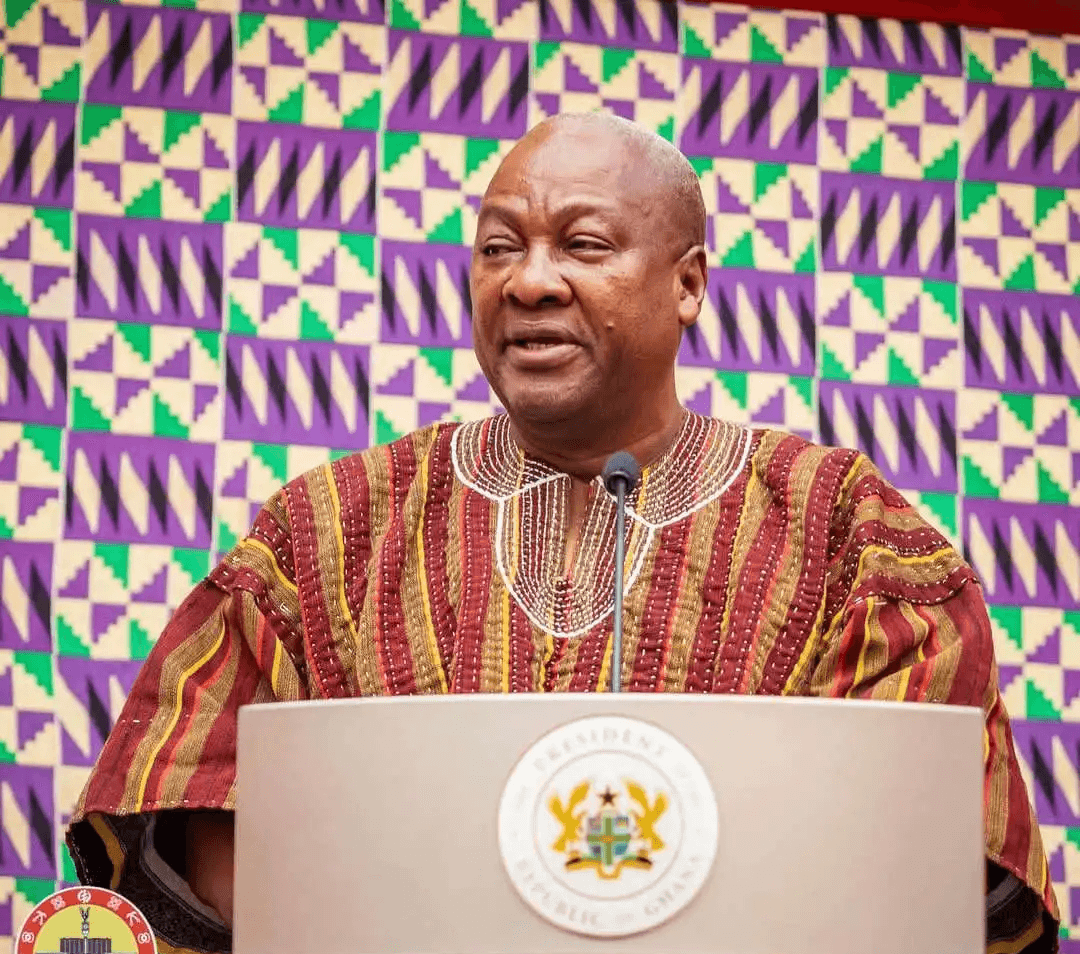
In a stirring and data-driven State of the Nation Address (SONA) delivered today in Parliament, President John Dramani Mahama echoed a sentiment of hard-won resilience, the President’s message was clear: the era of economic hemorrhage and uncertainty is over. Through the “Resetting Ghana Agenda” and the “Accra Reset,” the nation has shifted from a state of recovery into a powerful "take-off mode."
For the foreign investor seeking a stable, high-growth gateway to Africa, and for the Ghanaian citizen ready to carve their future, the message was unanimous: “Ghana is back. Ghana is working again, and Ghana is open for business.” Here are some key takeaways from President Mahama’s address:
Macroeconomics by the Numbers
Just over a year ago, Ghana faced a daunting debt shackle and record-breaking inflation. Today, the President presented a scorecard that has caught the attention of global rating agencies like Fitch, Moody's, and S&P.
Growth & Scale: Ghana’s GDP has surged to $113 billion, firmly cementing its place among the top 10 largest economies in Africa.
Inflation Tamed: In a remarkable feat of fiscal discipline, inflation dropped from 23.5% in late 2024 to 3.8% as of January 2026 within 13 months.
Currency Strength: The Cedi has appreciated by 40.7% against the US Dollar, 30.9% against the Pound and 24% against the Euro, offering businesses the predictability they crave.
Fiscal Discipline: The government achieved a primary surplus of 2.6% of GDP, proving that Ghana has traded waste for reform and Public debt fell by GH¢82.1b, from 61.8% to 45.3% of GDP.
Our nation is on the runway. It is in take-off mode, and you are all advised to fasten your seatbelts. The journey continues. But the direction is set. And the hope is real.
The 24-Hour Economy: A Bold Frontier for Industry
The cornerstone of the President's industrial vision is the newly legislated 24-Hour Economy Authority. This is not just a policy; it is a structural transformation. By introducing round-the-clock economic activity, Ghana is doubling its productivity potential. The government has allocated GHS 110 million to kickstart this initiative, backed by strategic partnerships with the Development Bank of Ghana. Whether in manufacturing, logistics, or services, Government is willing to provide the security, the power, and the rails; you provide the innovation and the jobs.
Energy Sovereignty: Powering the Future
With $3.5 billion in new investments committed for the Jubilee and OCTP fields, Ghana is rapidly scaling domestic gas production. Moreover, the "Green Transition" is in full swing, with massive solar projects like the 200 MWp Dawa Industrial Zone project and 35 renewable mini-grids ensuring that industry is powered sustainably and affordably.
Feed Ghana: Agriculture as an Asset Class
Agriculture has been reset from a subsistence struggle to a high-tech growth sector.
Under the Feed Ghana Programme, food inflation has dropped to 4.9%.
€154 million Italy–Ghana irrigated commercial farming project, covering 10,000 hectares
Construction of 10 new small dams, 250 solar-powered boreholes and rehabilitation of 8 irrigation dams.
GHS 300m commitment to the National Food Buffer Stock Company to build a food reserve for national resilience.
This represents a prime opportunity for agro-industrial investors to tap into a sector that is moving away from rain-fed dependence toward year-round, mechanized production. The National Service Agripreneur Programme is already absorbing thousands of "agri-visionaries" into permanent service, turning the "Motherland" into a breadbasket for the continentt.
Healthcare: Sovereign, Modern, and Equitable
Ghana is shifting from donor dependency to investment-driven health systems.
Health Sovereignty & The Africa Compact: Ghana is leading the charge for a reimagined global health governance. This includes the launch of the SUSTAIN Initiative, aimed at powering domestic vaccine production and private-sector health infrastructure.
Dialysis & Cancer Care: In a move to protect the most vulnerable, the President announced the scrapping of taxes on essential medical supplies for dialysis and the establishment of a Cancer and Kidney Disease Trust Fund.
Agenda 111 & Franchising: To complete the ambitious Agenda 111 hospital projects, the administration is introducing a Public-Private Partnership (PPP) and franchising model, opening significant opportunities for healthcare operators to partner with the state in facility management.
Manufacturing: Opportunities for pharmaceutical entrepreneurs to produce vaccines and essential medicines locally as part of the "Health Sovereignty" mandate.
In 2026, direct government funding will account for about 72% of total health spending, up from 56.8% in 2023.
Public-Private Partnership (PPP) and franchising model to complete the Agenda 111 hospital projects.
Africa must take ownership of its health security, pool its resources, deepen collaboration, and design financing solutions that reflect our realities rather than external prescription.
Education: Training the Workforce of 2030
Ghana’s "Reset" in education focuses on quality, teacher welfare, and technical mastery.
Technical Universities & Innovation Hubs: Plans were unveiled for three new technical universities designed as hubs for industrial collaboration, ensuring that graduates possess the skills required by the technology-driven 24-hour economy.
Digital Literacy from KG to SHS: A new ICT integration project for 300 early childhood classrooms and the establishment of 30 ICT Centers of Excellence ensure that the next generation is "digitally native."
Construction of 200 KG, 200 primary school, 200 junior high school blocks and 6 Regional TVET Centres of Excellence for practical, industry-relevant skills.
Convert and upgrade 30 Category C schools to Category B, and 10 Category B schools to Category A.
Review of the national curriculum to align with the OECD Future of Education and Skills framework.
Innovation & Digital Infrastructure
Innovation in 2026 is no longer a buzzword in Ghana—it is a legal mandate.
TVET Digital Centers of Excellence: These centers are being established across all regions to support digital skills training and entrepreneurship, providing a pipeline of talent for tech startups and BPO (Business Process Outsourcing) centers.
The "Aspire24" Pillar: As part of the 24-hour economy rollout, the Aspire24 sub-program will expand digital literacy and industry-relevant competencies, preparing 30,000 young people for the global remote-work economy.
Smart Cities & Logistics: Through Connect24, the government is deploying digital trade platforms and cold-chain infrastructure to ensure that Ghanaian innovation reaches global markets with zero friction.
The Financial Empowerment of Women: GHS 401 Million Commitment
One of the most significant announcements for the local economy was the progress of the Women’s Development Bank.
The Allocation: GHS 401 million has been earmarked in the 2026 Budget.
The Goal: To provide direct financial oxygen to women-owned businesses, moving beyond micro-credit to institutionalized economic empowerment.
Tourism & The Creative Economy
Direct Funding: GHS 40 million total has been allocated to the film and broader creative sectors.
Venue Reset: Beyond refurbishing the Accra International Conference Centre (AICC)
work begins this year on a brand-new, world-class Convention and Creative Events Centre to make Ghana West Africa's MICE (Meetings, Incentives, Conferences, and Exhibitions) hub.
Youth Employment
In 2025, 10,887 young people were trained in entrepreneurship programmes and job creation, 2026 will see a scale up of an additional 10,000 young people.
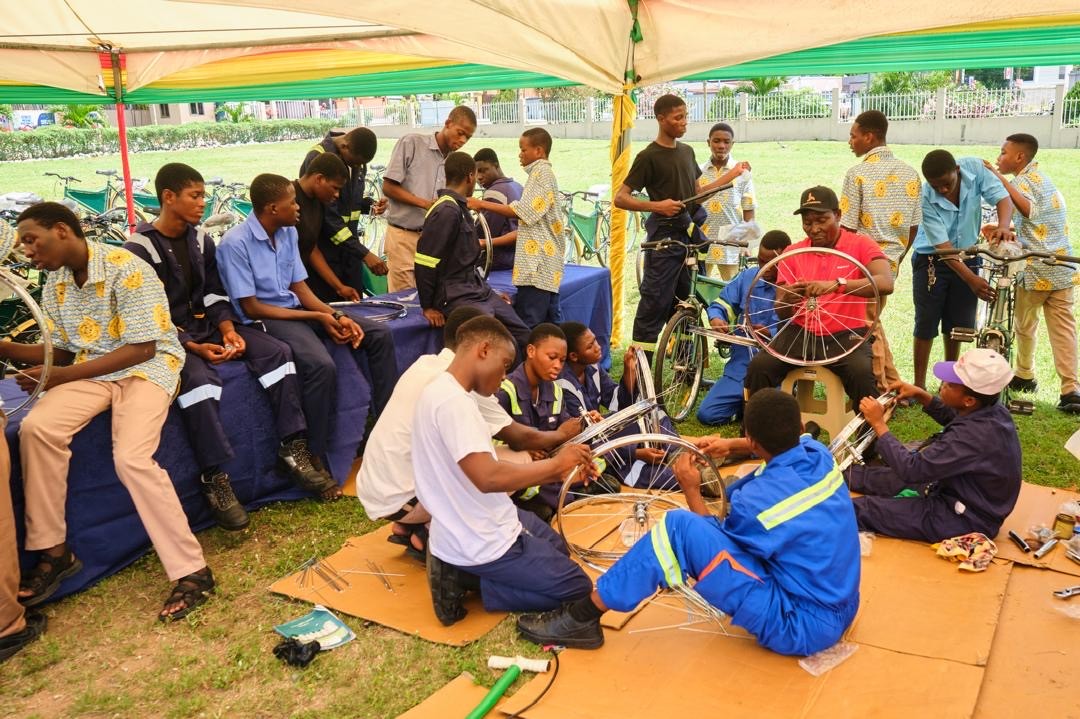
The National Apprenticeship Programme onboarded 14,000 young people during the pilot phase, and they have started receiving start-up kits.
Digital Diplomacy & The Diaspora
The Diaspora contributed a record $7.8 billion in remittances in 2025. The largest annual inflow ever recorded. This reflects not only confidence in our economy, but the enduring patriotism of our citizens living and working across the world.
A Nation on the Rise
President Mahama concluded with a powerful reminder of Ghana's global brand equity, citing the recent unified response to cultural mislabeling in Zambia as proof of a nation that knows its worth.
No single African country, no matter how well-endowed, can thrive alone in this new global environment. Rather, when we (Africa) work together, our combined markets, youthful population, natural resources, and creativity will constitute one of the greatest economic opportunities of this century.
"Our direction is set. The hope is real," the President concluded.
For the global community and the Ghanaian people, the State of the Nation is clear: the foundation is laid, the engine is roaring, and the take-off has begun.
Read the full speech here: https://presidency.gov.gh/wp-content/uploads/2026/02/State-of-the-Nation-2026.pdf
Related Reads for You
Discover more articles that align with your interests and keep exploring.