In discussions about Africa’s economic future, two phrases consistently dominate the conversation: sustainable mobility and local industrialization. Yet, turning these grand concepts into tangible reality requires a rare blend of structural vision and boots-on-the-ground execution.
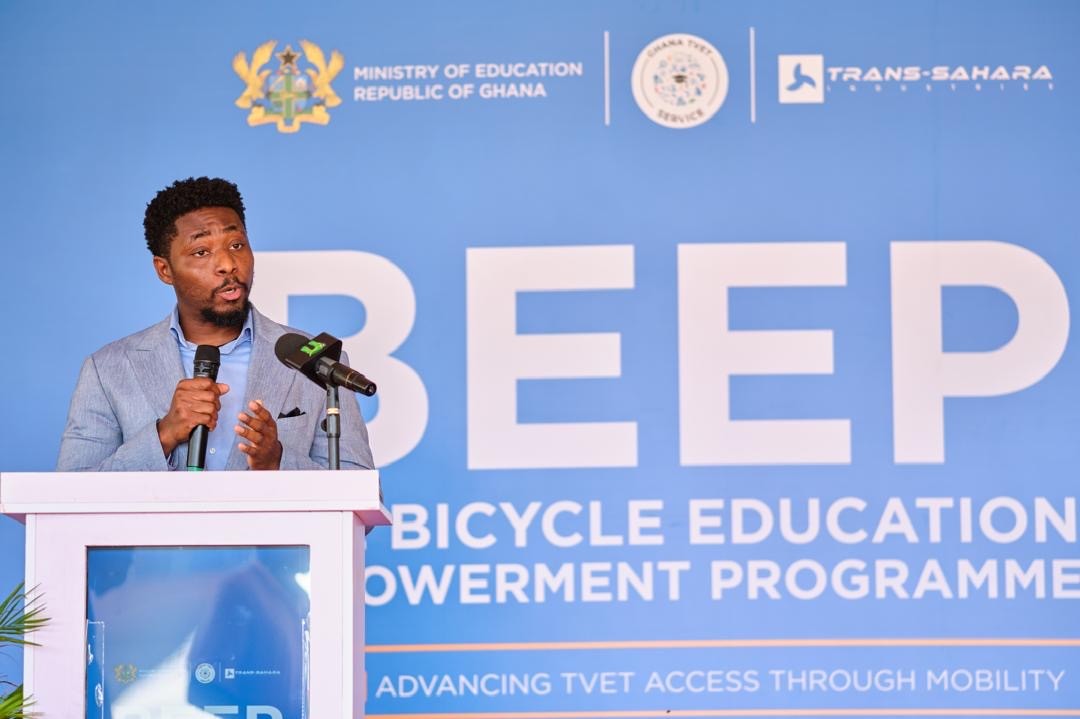
In Ghana, Gerald Acheampong, the Founder and Managing Director of Trans Sahara Industries, is quietly building that exact bridge to transform the simple bicycle into a tool to improve access to essential services like healthcare, education & food in addition as a launchpad for advanced manufacturing and technical education, Acheampong is proving that the road to Africa's heavy industrial future begins by empowering its youth.
T, you need world-class foundations. Trans Sahara secured the foundations to build a sophisticated manufacturing base from scratch, through a strategic partnership with global heavyweights in the automotive component space whose engineering spans from everyday bicycle parts to high-performance Formula One components. That partnership became the conduit for critical technical knowledge transfer, establishing rigorous manufacturing capabilities right here in Ghana.
The strategic genius of Trans Sahara lies in its progressive roadmap. Instead of attempting to manufacture complex consumer vehicles overnight, the enterprise began with the most accessible, high-utility form of transport available: the bicycle. By mastering the supply chains, assembly precision, and component manufacturing of two-wheelers, the company is systematically laying the groundwork for a much larger transformation: a fully integrated, domestic electric mobility ecosystem.
Pivot and Resilience: The Birth of BEEP
The journey of any true social enterprise is tested by its resilience to shifting landscapes. Early on, Trans Sahara partnered with the United States Agency for International Development (USAID) on an ambitious initiative to manufacture and distribute 10,000 bicycles, targeting distance as a barrier to survival and success in rural Ghana.
When international development programs shifted and the USAID initiative concluded, Gerald pivoted inward, anchoring the company’s mission in sustainable, institutional local partnerships.
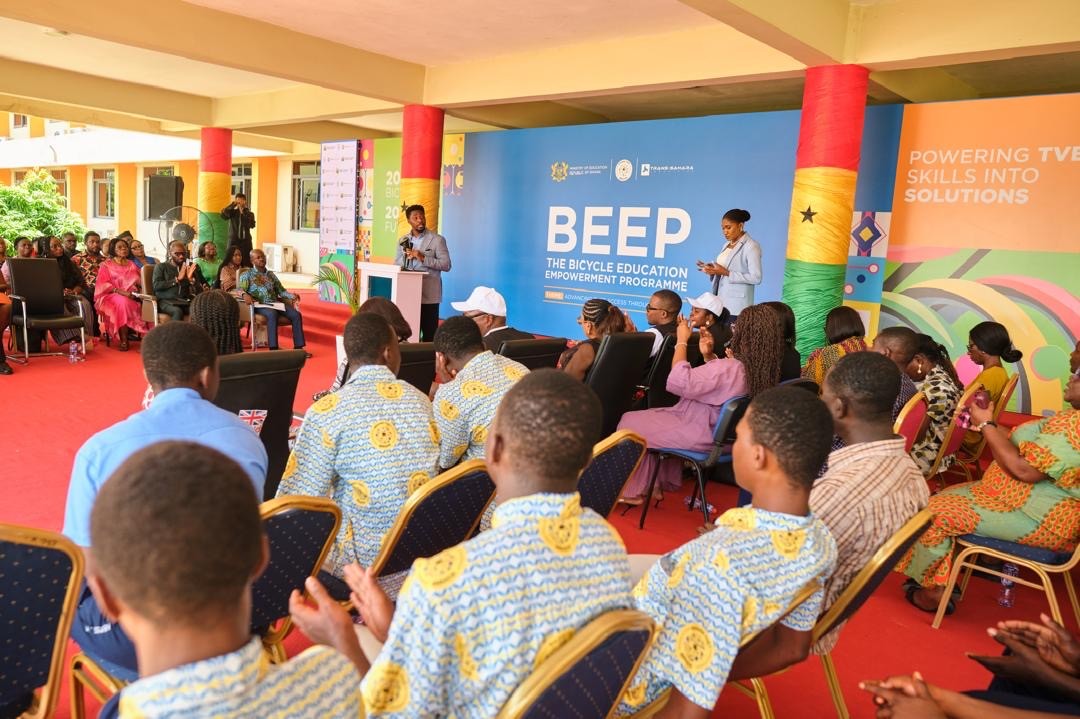
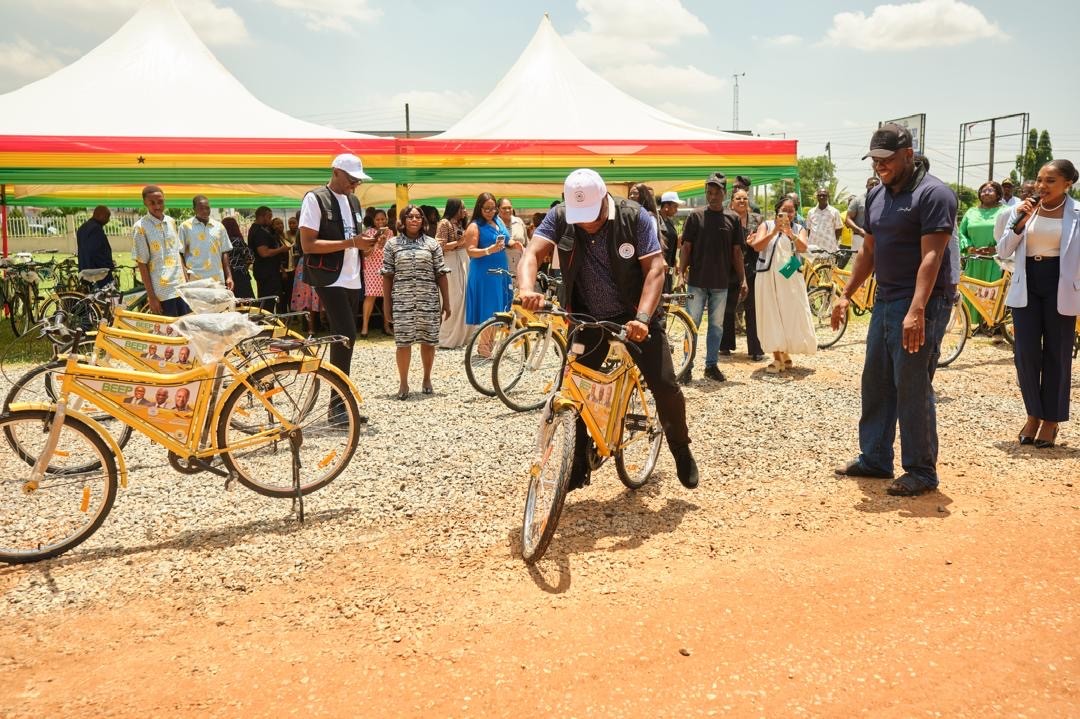
This resilience gave rise to the Bicycle Education Empowerment Programme (BEEP), a massive collaborative initiative launched alongside the Ghana TVET Service and the Ministry of Education. BEEP is designed with a dual-engine model that solves two critical developmental challenges simultaneously:
Mobility as a Right: to provide locally assembled bicycles to over 20,000 students annually, drastically reducing school dropout rates caused by long, exhausting daily commutes. It similarly expands the reach of rural healthcare workers and smallholder farming families trying to get goods to local markets.
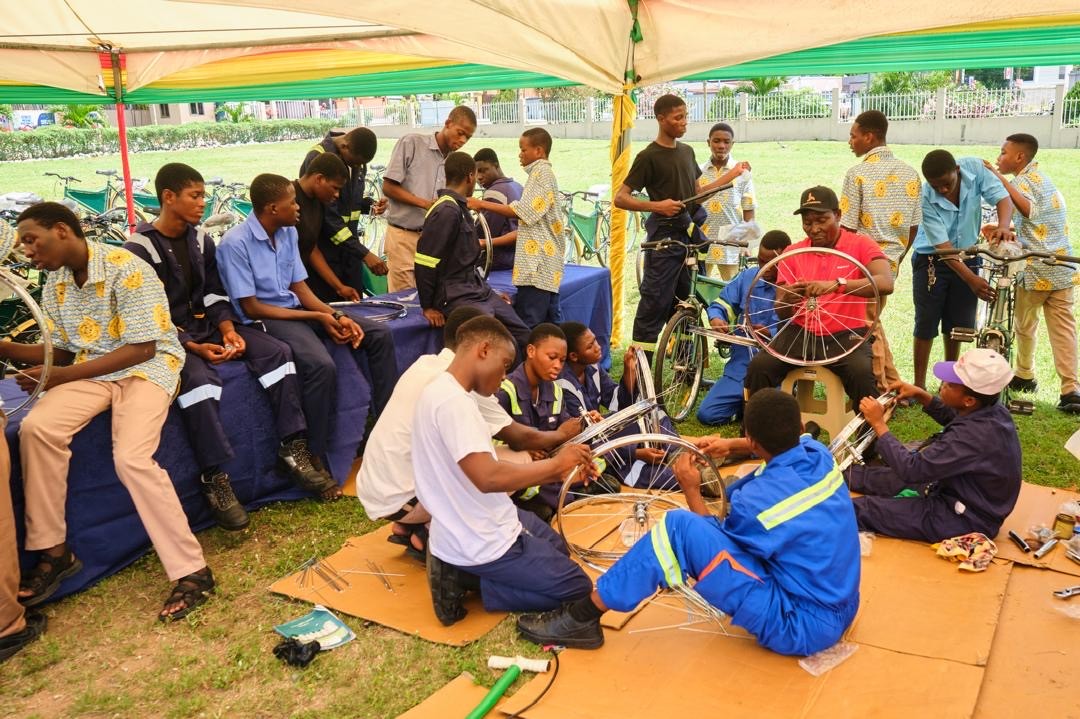
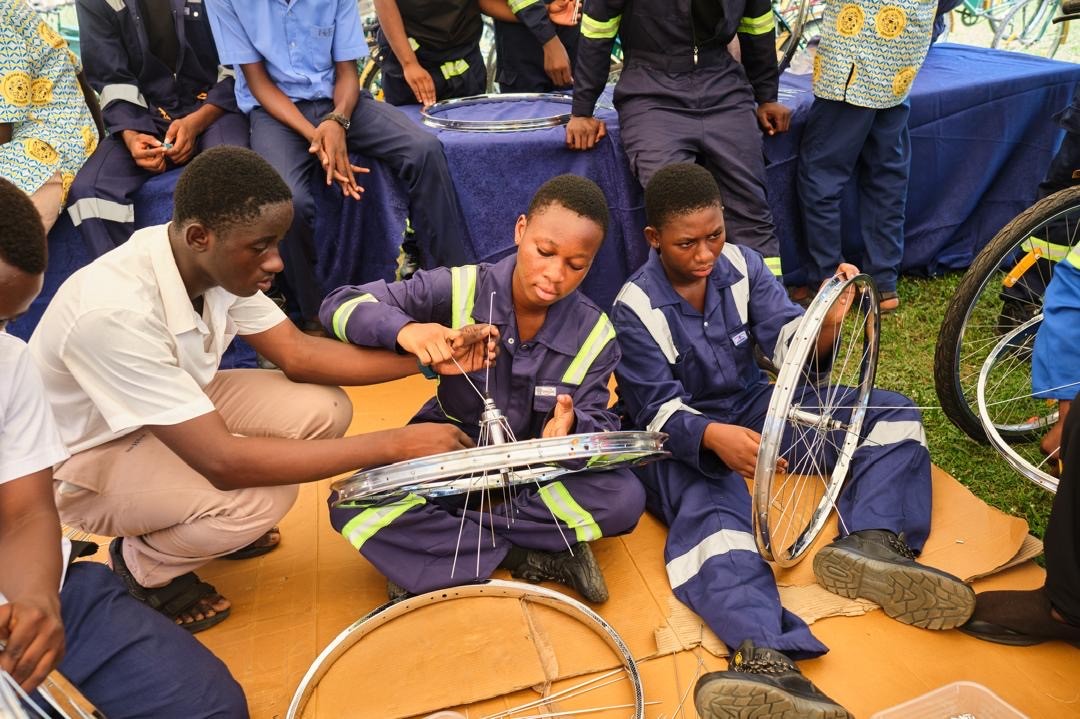
Workforce as an Engine: BEEP isn’t just a distribution program; it is a live manufacturing classroom. The bicycles are assembled and maintained through hands-on technical training tracks, turning a social welfare initiative into an active industrial incubator.
Radical Inclusion: Training the Workforce of Tomorrow
An industrial sector is only as strong as its technical workforce. Trans Sahara Industries has intentionally designed its hiring and training pipelines to uplift Ghana's most vulnerable demographic groups.
The company creates direct, dignified training and employment pathways for Technical and Vocational Education (TVET) students, and street-connected youth. By transitioning young people from informal, often hazardous livelihood strategies into structured, hands-on manufacturing roles, Trans Sahara is achieving a profound double-bottom-line impact.
These young workers are not just learning how to build bicycles; they are becoming the specialized technicians, assembly experts, and mechanics who will spearhead Ghana’s transition into clean energy transport.
The Decade Ahead: Driving Toward Clean Mobility
The foundational work being done today by Trans Sahara Industries is the prelude to an ambitious clean-mobility expansion. The technical expertise, factory infrastructure, and trained workforce being cultivated through the BEEP initiative are directly feeding into the company's next phases: the deployment of commercial electric motorcycles, localized battery-swapping infrastructure, and eventually, electric mass-transit buses across Ghana's urban centers.
Gerald’s work suggests that the tools, the talent, and the market are already here. Through Trans Sahara Industries, manufacturing is proving to be the ultimate form of social empowerment—one that reduces poverty, keeps children in school, and positions Ghana as a vanguard of sustainable transportation in West Africa.
Related Reads for You
Discover more articles that align with your interests and keep exploring.